
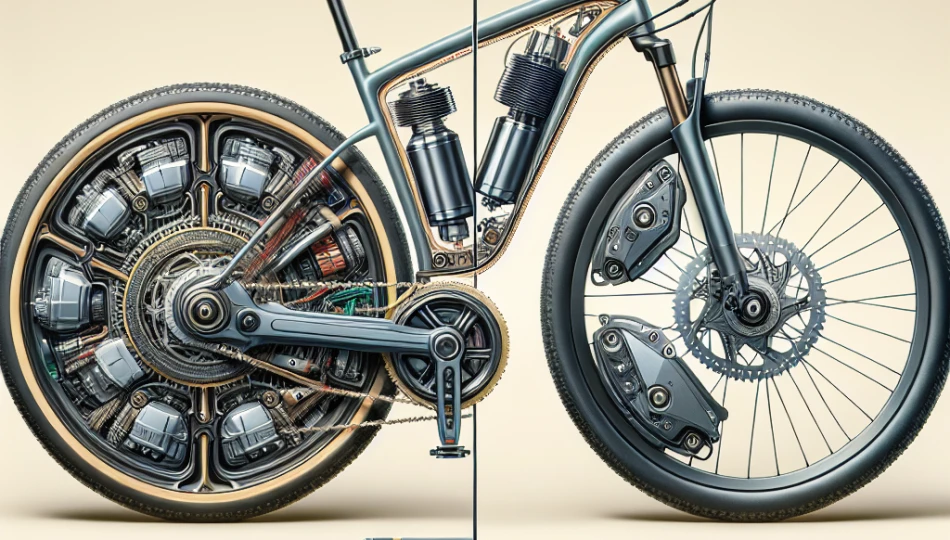
As the popularity of electric bikes (e-bikes) continues to surge, understanding the technology behind them becomes essential for buyers and enthusiasts alike. Among the many components that differentiate e-bikes, the type of motor is particularly significant, with two main contenders: mid-drive motors and rear-hub motors. Both have their unique advantages and approaches to providing electric assistance, making it crucial to understand how they differ. What is the difference between mid-drive and rear-hub motors? The primary difference lies in their design and placement on the bike, which affects performance, handling, weight distribution, and overall riding experience.
1. Location of the Motor
The most apparent difference between mid-drive and rear-hub motors is their placement on the bike. Mid-drive motors are located at the bike’s crankset, directly in the center of the frame. This central position provides balanced weight distribution, which is beneficial for handling and stability. On the other hand, rear-hub motors are built into the rear wheel’s hub, resulting in a different handling experience as the weight is shifted towards the back of the bike.
- Mid-Drive Motor: Centrally located, enhancing balance and responsiveness during rides.
- Rear-Hub Motor: Situated within the rear wheel, which can lead to a different weight distribution and handling dynamics.
The centralized placement of mid-drive motors allows for better maneuverability, particularly on steep inclines or during tight turns. Additionally, since the motor is closer to the bike’s center of gravity, it can make a significant difference in how the bike feels during aggressive riding. Conversely, while rear-hub motors can provide a straightforward ride experience, they might make the bicycle feel less stable when navigating challenging terrain.
2. Power Delivery and Efficiency
Power delivery is another critical difference between these two motor types. Mid-drive motors tend to offer more efficient power transfer, as they can utilize the bike’s gears to optimize assistance. This means that e-bikes equipped with mid-drive systems can better adapt to varying terrain, maintaining efficiency and range during challenging rides.
- Gearing Benefits: Mid-drive systems benefit from the existing gearing, allowing riders to select gears that match terrain and riding style.
- Energy Use: Mid-drives often consume battery power more efficiently, especially on hills and rugged trails.
In contrast, rear-hub motors provide a more straightforward mechanism for power delivery. They deliver power directly to the rear wheel, which can sometimes lead to less instant responsiveness compared to mid-drives. For flat terrain or casual city riding, rear-hub motors can perform admirably. However, they may struggle with steep inclines where a mid-drive’s gear management shines.
3. Maintenance and Repair
When it comes to maintenance and ease of repair, mid-drive and rear-hub motors display significant differences. Mid-drive systems typically require more intricate maintenance due to their design and involvement with various bike components, such as the chain and gears. Over time, these parts may wear out more quickly due to the additional torque exerted on them by the motor.
- Components Affected: Chains and gears may need more frequent replacements when using a mid-drive motor.
- Service Complexity: Mid-drive motors can be more complex to service due to their integration with the bike’s transmission system.
On the other hand, rear-hub motors are generally considered lower maintenance. Since they are sealed units incorporated into the wheel, there are fewer moving parts exposed, meaning less wear and tear on the drivetrain. If a rear-hub motor does require servicing, it often involves simply replacing the rear wheel, making it a more straightforward process for both the owner and the mechanic. This simplicity can be appealing for casual riders who may not want to deal with complex repairs.
4. Weight Distribution and Ride Feel
Weight distribution is crucial in ensuring a comfortable and controllable ride. As mentioned earlier, mid-drive motors are mounted centrally, which allows for better weight management. This centralization enhances the bike’s overall handling and responsiveness, especially when cornering and climbing.
- Mid-Drive Weight Balance: A bike with a mid-drive motor often feels less heavy and more agile, which is favorable for those who enjoy trail or off-road riding.
- Rear-Hub Weight Dynamics: Rear-hub motors can create a sensation of ‘pulling’ towards the back of the bike, which may affect ride quality, particularly in steep climbs.
The difference in ride feel is particularly noticeable during various cycling conditions. Riders on mid-drive e-bikes may feel more stable due to the equal distribution of weight, making it easier to navigate obstacles and steep terrain. Conversely, riders on rear-hub motor bikes might feel less control, as the weighting towards the rear can make the front end feel lighter, which can lead to less confidence when tackling hilly paths.
5. Cost and Availability
The cost of e-bikes can vary widely based on several factors, including the type of motor. Generally, mid-drive motors tend to be more expensive due to their complexity and the technology involved in their designs. They often come equipped with high-quality components, leading to a higher retail price for mid-drive e-bikes.
- Price Range: Expect to pay a premium for mid-drive systems compared to equivalent rear-hub motor systems.
- Quality Factors: Mid-drive motors are often associated with higher-quality components and sophisticated designs.
In contrast, rear-hub motors are typically offered in a broader range of budget options, making them an attractive choice for casual cyclists or beginners entering the e-bike market. This affordability can make rear-hub e-bikes more accessible for those who may not want to invest heavily in a high-end model, especially if they plan to use their bike primarily for commuting or leisure riding on flat terrain.
While mid-drive motors have become increasingly popular, particularly for those who consider performance and efficiency crucial, rear-hub motors still hold a significant position in the market due to their affordability and reduced maintenance costs.
Performance in Different Riding Conditions
Performance varies greatly between mid-drive and rear-hub motors, especially in diverse riding conditions. Riders often encounter varying terrains and climate factors that can affect how their e-bike handles. Understanding how each motor type performs in these different scenarios can help inform a buyer’s decision.
Mid-Drive Motors in Varied Terrain
Mid-drive motors excel in hilly and rugged terrains due to their ability to leverage the bike’s gearing system. This versatility means that riders can easily switch gears based on the trail conditions, allowing for more efficient climbing on steep grades. The torque generated by mid-drive motors can help riders tackle challenging ascents with confidence.
Additionally, mid-drive motors often provide a more natural riding experience. As these motors engage with the bike’s chain, they deliver power more evenly, mimicking the feel of traditional cycling. This quality enhances the rider’s control, making sharp corners and downhill descents more manageable. Riders who venture off-road or enjoy mountain biking will appreciate the responsive handling a mid-drive motor provides.
Rear-Hub Motors for Urban Commuting
On the other hand, rear-hub motors shine in urban environments, particularly on flat roads. They offer a straightforward and user-friendly experience, perfect for commuters traversing city streets or leisurely cycling along bike paths. The simple engagement of rear-hub motors provides a powerful boost that is appreciated when meeting traffic or accelerating from stops.
As rear-hub motors are typically easier to control and provide steady assistance, they are ideal for casual riders who do not engage in demanding rides, such as steep hills or rugged trails. While they may not perform as effectively in climbing situations, they still offer ample power for everyday scenarios like commuting and pleasure riding.
Understanding the Technology Behind the Motors
Knowing the technology underlying mid-drive and rear-hub motors can also influence a consumer’s preference. Various technological advancements have improved both motor types, making it essential to consider each motor’s specific features.
Mid-Drive Technologies
Mid-drive motors often come equipped with torque sensors that gauge how hard a rider pedals and adjust the motor’s output accordingly. This adaptability creates a more fluid and responsive riding experience. For instance, if a rider pushes harder on the pedals, the torque sensor increases the motor’s assistance, allowing for a more significant power boost just when it’s needed most. This feature can be particularly advantageous on steep climbs or when accelerating from a stop.
Moreover, many mid-drive motors can integrate with advanced battery management systems, enabling enhanced energy efficiency. This refinement can lead to longer rides and improved distance coverage on a single charge, making mid-drive motors a strong choice for users who prioritize efficiency during longer commutes or excursions.
Rear-Hub Motor Innovations
Despite their simpler design, rear-hub motors have also seen innovations, especially with advancements in brushless DC technology. Brushless motors are less prone to overheating and typically require less maintenance, contributing to their appeal for everyday riders. Furthermore, these motors have become more compact and lighter, allowing for sleeker bike designs without compromising on power.
Many modern rear-hub motors also feature regenerative braking capabilities, which can recharge the battery slightly while decelerating. This technology has gained traction, providing an added benefit for users who often ride in stop-and-go situations. It reflects a growing trend in the e-bike industry toward maximizing energy efficiency wherever possible, regardless of motor type.
Frequently Asked Questions
1. Which motor type is generally more lightweight?
Mid-drive motors tend to weigh slightly less than their rear-hub counterparts because they are usually smaller and centrally located on the bike. However, considering the additional components such as the battery and gearing systems, the overall weight of the bike may vary based on the specific design and materials used. In urban designs, lightweight components might offset the weight advantage offered by mid-drive systems.
2. Are mid-drive motors quieter than rear-hub motors?
Mid-drive motors are typically quieter than rear-hub motors due to their integration with the bike’s drivetrain. The noise produced by mid-drive motors often blends with the normal sounds of pedaling, resulting in a more subdued experience. Conversely, rear-hub motors can sometimes produce a noticeable whirring or humming sound, especially at higher speeds, which some riders may find distracting.
3. Can mid-drive motors handle heavy loads better?
Yes, mid-drive motors generally manage heavy loads and steep climbs more effectively. Due to the ability to utilize the bike’s gears, mid-drive motors can apply the necessary torque to tackle challenging conditions with greater ease. This feature is especially beneficial for e-bikes designed for touring or cargo use, where weight distribution and handling are essential.
4. Can I convert my traditional bike to use a mid-drive or rear-hub motor?
Yes, it is possible to convert a traditional bike to an e-bike using either a mid-drive or rear-hub motor. Kits exist for both types, enabling DIY enthusiasts to transform their standard bicycles into electric-powered rides. However, it is crucial to ensure compatibility with the existing bike frame and components. Professional installation is recommended for mid-drive systems for proper integration and performance.
5. Which type of motor is best for beginners?
For beginners, rear-hub motors are often recommended due to their simplicity and ease of use. They generally require less maintenance, making them an attractive option for those new to cycling or e-bikes. Additionally, rear-hub motors provide a straightforward riding experience that does not necessitate complex gear shifting, which can be advantageous for casual riders.
6. How do battery capacities influence motor performance?
Battery capacity significantly impacts both mid-drive and rear-hub motor performance. A larger battery allows for longer rides, provided the motor’s efficiency is considered. Mid-drive e-bikes typically extract more energy efficiently from their batteries during overlaps in gearing and torque, making them suitable for more demanding rides. Rear-hub systems may provide solid power but can consume battery reserves more quickly under heavy loads or inclines.
7. Are there any limitations to each motor type?
Yes, each motor type has its limitations. Mid-drive motors can lead to faster wear and tear on the drivetrain components, requiring more maintenance. They also tend to be pricier due to their complex design. Rear-hub motors, while lower in maintenance, may struggle with steep climbs or inefficient power transfer on uneven terrains, making them less suitable for more aggressive riding styles.
Summing It Up
Understanding the differences between mid-drive and rear-hub motors can significantly influence your e-bike purchase decision. Mid-drive motors bring advantages in handling, power delivery, and efficiency, making them ideal for riders looking for performance, especially in challenging terrains. However, they do require more maintenance and come at a higher cost.
On the other hand, rear-hub motors offer simplicity, lower maintenance, and affordability, appealing to casual riders or those in urban environments. Their straightforward design allows new cyclists to enjoy the experience without the added complexity of gear systems.
Ultimately, whether you choose a mid-drive or rear-hub motor should depend on your specific riding habits, budget, and preferences. By weighing the advantages and disadvantages of each type, you can make a more informed decision that best suits your cycling lifestyle.